
Corporate Governance
- Basic Views on Corporate Governance
- Corporate Governance Framework
- Appointment and Dismissal of Directors
- Structure of the Board of Directors and Areas of Expertise by Directors
- Status of Activities of the Board of Directors, Audit & Supervisory Committee, and Other Committees
- Evaluation of the Effectiveness of the Board of Directors
- Compensation for officers
- Policy for Constructive Dialogue with Shareholders
- Cross-shareholdings
- Corporate Governance Report
Basic Views on Corporate Governance
While emphasizing initiatives to achieve sustainable corporate growth and improvement in corporate value over the medium to long term, MHC aspires to contribute to a more prosperous society by respecting the rights and interests of all of its stakeholders–shareholders, customers, local communities, and employees–and fulfilling their trust in the Company, based on the views presented below.
With the recognition that it is one of its social responsibilities to ensure transparent and sound management, MHC continues to work on initiatives to enhance corporate governance by boosting the activity of the Board of Directors, reinforcing the Audit & Supervisory Committee and the internal audit system, ensuring timely and appropriate disclosures of information, and actively engaging in investor relations (IR) and other activities.
(1) Fostering Sound Corporate Culture
In accordance with Our Vision, which guides all of MHC’s activities, and the Mitsubishi HC Capital Group (hereinafter “MHC Group” or “Group”) Code of Ethics and Code of Conduct, which serve as standards for the decisions and behaviors of all employees, MHC strives to understand the diversity of its various stakeholders including shareholders, customers, local communities, and employees and foster a corporate culture that respects their rights and perspectives and sound business activities.
(2) Ensuring Appropriate Information Disclosure and Transparency
MHC conducts proactive and continuous information disclosure in order to be trusted and properly evaluated by each of its stakeholders. It also establishes and appropriately operates internal systems to facilitate the swift and impartial disclosure of accurate information regarding its management policies, business strategies, business activities, financial condition, etc. In addition to the items MHC is required to disclose pursuant to laws and regulations, it actively and voluntarily discloses non-financial information deemed useful to its stakeholders.
(3) Ensuring the Rights and Equal Treatment of Shareholders
MHC takes appropriate steps to ensure that the rights of shareholders are secured and can be exercised effectively, and all shareholders, including minority shareholders and foreign shareholders, are treated equally.
(4) Constructive Dialogue with Shareholders
Through events such as General Meetings of Shareholders, financial results briefings, and other domestic and overseas investor relations events, MHC pursues proactive and constructive dialogue with diverse shareholders. It thereby seeks to gain understanding from shareholders regarding matters such as its business strategies and further enhance corporate governance through dialogue.
(5) Ensuring Effectiveness of the Board of Directors
All members of the Board of Directors call upon their experience and insight as they engage in free and open discussions, supporting appropriate risk-taking. In this manner, they adequately fulfill their duties and responsibilities to achieve the sustainable growth of MHC, improvement in its corporate value over the medium to long term, enhancement of its capital efficiency and other figures, etc.
Corporate Governance Framework
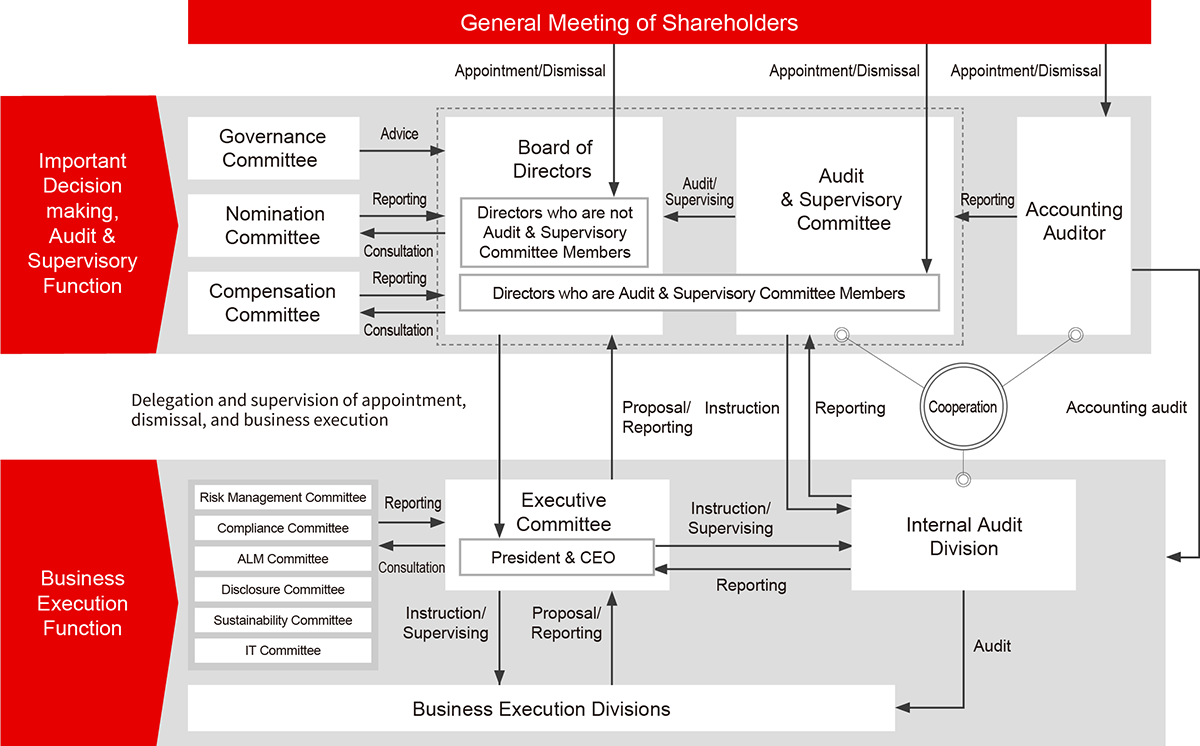
MHC is a company with an Audit & Supervisory Committee and has established a Board of Directors to be responsible for important decision-making and supervisory functions, and an Audit & Supervisory Committee to be responsible for audit and supervisory functions.
In order to further enhance its corporate governance, MHC has also established a Nomination Committee and a Compensation Committee to serve as advisory bodies to designate the President & CEO and determine the compensation, etc. of Directors. Further, MHC has established a Governance Committee, which consists of Outside Directors, Representative Directors, etc., to serve as an advisory body to the Board of Directors regarding the improvement of the effectiveness of the Board of Directors, etc.
Alongside adopting an executive officer system, MHC has established an Executive Committee to serve as a body for deliberation and decision-making on important management matters.
Matters Concerning the Board of Directors
MHC implements a system to manage and operate business in line with the basic policy of the MHC Group decided by the Board of Directors. MHC’s Directors possess qualities appropriate for their positions, giving the Board of Directors a set of diversified and sufficient skills.
In addition, for timely, appropriate, and smooth provision of information particularly to Outside Directors, the Governance Planning Gr. of the General Affairs Department serves as the secretariat for the Board of Directors, and the Audit & Supervisory Committee Office has been established to assist the duties of Directors who are Audit & Supervisory Committee Members.
MHC is engaged in initiatives for stimulating discussions on important agenda items, such as (1) providing prior explanations, (2) having several times of deliberations at Board of Directors meetings, and (3) regularly confirming the progress of the items after decisions are made.
Each year, all Directors conduct a review of activities of the Board of Directors and evaluate its effectiveness. In addition, discussions attended only by independent Outside Directors and meetings for independent Outside Directors to exchange opinions with the Chairman and the President & CEO are held regularly, and in the event that an issue, etc. is raised there, it will be appropriately responded to and improved.
Matters Concerning the Governance Committee, Nomination Committee, and Compensation Committee
MHC has established the Governance Committee, consisting of Outside Directors, Representative Directors, etc., which exchanges a wide range of opinions on the improvement of the Board of Directors’ effectiveness and other matters regarding the Board of Directors, in order to work on the improvement of the soundness, transparency, and fairness of management.
MHC, based on the understanding that appropriate involvement of independent Outside Directors is important for resolutions related to nomination and compensation, has established the Nomination Committee and Compensation Committee, of which independent Outside Directors comprise the majority. In addition, from the perspective of enhancing the independence and objectivity of the functions of the Board of Directors and its accountability, MHC assigns independent Outside Directors as the chairpersons of the committees.
The Nomination Committee discusses the appointment of Directors, the succession plan for the President & CEO, knowledge, experience, skills, etc. that the Board of Directors should have, and other matters.
The Compensation Committee regularly monitors MHC Directors’ compensation in comparison with the market standard by using an external specialized agency, and discusses policies, concerning the systems, standards, etc. for officers’ compensation.
Matters Concerning Business Execution
As a company with an Audit & Supervisory Committee, MHC delegates business execution decisions to the Executive Committee, a body that will deliberate and decide on important management matters, within an appropriate scope, and expedites the decision-making process, in order to further strengthen the supervisory functions of the Board of Directors. In addition, MHC has adopted an executive officer system in order to further enhance and invigorate the functions of the Board of Directors by clarifying the responsibilities related to the execution of business.
The Executive Committee is composed of the President & CEO, Deputy Presidents, and Executive Officers separately specified by the President & CEO. In principle, the committee deliberates on matters to be submitted to the Board of Directors in advance in order to facilitate decision-making by the Board of Directors, in addition to holding deliberations and making decisions on important matters, including the business management of the Group.
Status of Audits
Audit & Supervisory Committee
Based on its basic policy of conducting audits that contribute to the establishment of a sound corporate governance framework, the Audit & Supervisory Committee works in close coordination with the Internal Audit Department, departments responsible for internal control functions, and the Accounting Auditor, and conducts effective audits through the following activities.
| Major Audit & Supervisory Committee Activities | |
|---|---|
| Deliberations, etc. at the Audit & Supervisory Committee |
|
| Attendance at important meetings |
|
| Visits to offices in Japan and overseas |
|
| Opinion exchanges with the management team |
|
Department in Charge of Internal Audits
MHC has established the Internal Audit Department as a department in charge of internal audits. In order to ensure independence and objectiveness, the Internal Audit Department adopts a structure under which its members do not concurrently perform the operations of business execution departments.
The Internal Audit Department systematically implements internal audits based on an annual audit plan, and reports the audit results to the Representative Directors, the Board of Directors, and the Audit & Supervisory Committee.
With regard to findings that require improvement, for which guidance was provided to the organizations subject to audits, those organizations are to report the results of improvement to the General Manager of the Internal Audit Department, and the Internal Audit Department reports the findings to Representative Directors, in order to ensure the effectiveness of the audit.
Accounting Auditor
Accounting audits are implemented by Deloitte Touche Tohmatsu LLC in collaboration with the Audit & Supervisory Committee and the Internal Audit Department, based on an audit agreement, and in conjunction with matters such as the provision of relevant information by the departments responsible for internal control.
Appointment and Dismissal of Directors
In determining an appropriate composition of the Board of Directors, we actively enhance the functions of the Board of Directors through increased diversity by electing persons expected to demonstrate the necessary skills and abilities in light of the respective management environment, while also recognizing and considering the importance of diversity in terms of gender, nationality, race, and other factors.
In addition, if Directors are found to meet the dismissal standards described below, their dismissal is deliberated by the Nomination Committee in a timely manner and decided by the Board of Directors.
Selection Standards
- 1Directors and Audit & Supervisory Committee Members should have the mental and physical soundness sufficient to execute business.
- 2Directors and Audit & Supervisory Committee Members should be persons who are well respected, possess excellent integrity, and hold themselves to high ethical standards.
- 3Directors and Audit & Supervisory Committee Members should have a law-abiding mentality.
- 4Directors and Audit & Supervisory Committee Members should be expected to make objective judgments regarding management and have excellent foresight and insight.
- 5It is reasonable to consider that the candidates will help strengthen the functions of the Board of Directors in view of their knowledge, experience, abilities, and other competencies.
- 6In addition to 1. to 5. above, candidates for Outside Directors should (i) have experience, achievements, and knowledge in their fields of specialization, (ii) be able to contribute to the implementation of appropriate decision-making and management supervision of the Board of Directors, and (iii) be expected to secure the time necessary to fulfill their duties.
- 7Candidates for reappointment should have performed roles expected of them during each of their previous assignments.
Dismissal Standards
- 1Directors significantly damaged the value of MHC by neglecting their duties.
- 2Directors violated laws, Articles of Incorporation, or other regulations/rules of MHC, or conducted an act against public order and/or morals, which caused serious damage to MHC or hindrance to the business of MHC as a result.
- 3Directors are deemed to not meet the selection standards for Directors.
Structure of the Board of Directors and Areas of Expertise by Directors
MHC has selected nine areas of skills that the Board of Directors should possess: corporate management, finance, global, sustainability, sales/marketing, IT/DX, finance/accounting, risk management / legal affairs, and talent management. It recognizes the importance of reviewing these areas of skills regularly in light of its management strategies and environment, and thus it will continue to consider this matter at Governance Committee and Nomination Committee meetings.
MHC also recognizes that diversity at the Board of Directors in terms of gender, nationality, race, etc. is important, and proactively works on strengthening the function of the Board of Directors by enhancing diversity.
In determining an appropriate composition of the Board of Directors, MHC believes, as a desirable way of achieving diversity within MHC, that it is necessary to elect desirable persons in consideration of gender, nationality, race, etc., making it a top priority that Directors can demonstrate the necessary skills and abilities in light of the respective management environment.
Currently, it is assumed that MHC’s Board of Directors consists of Directors from a variety of business categories and industries and has an appropriate number of members to ensure a balanced composition of appropriate skills and diversity.
Although no foreign Director has currently been elected, MHC acknowledges that the Board of Directors has been performing a supervisory function, as it has elected several Directors who possess a wealth of international business experience, and has received valuable opinions on global business development.
Changes in the Ratios of the Board of Directors
| Number of Directors | Non-executive Directors | Independent Outside Directors | |
|---|---|---|---|
| April 2021 | 15 | 53% | 33% |
| June 30, 2021 | 15 | 60% | 33% |
| June 30, 2022 | 14 | 57% | 36% |
| June 30, 2023 and beyond | 12 | 67% | 42% |
Reasons for Selection of Skills
| Category | Skill | Reason for Selection | |
|---|---|---|---|
| Matters Related to Overall Management | Corporate Management |
|
|
| Finance |
|
||
| Global |
|
||
| Sustainability |
|
||
| Matters Related to Earnings Growth | Sales/Marketing |
|
|
| Matters Related to Strengthening Corporate Functions | IT/DX |
|
|
| Finance/ Accounting |
|
||
| Risk Management/ Legal Affairs |
|
||
| Talent Management |
|
||
Skills That Should be Possessed by the Board of Directors (Skill Matrix) and Each Committee’s Members
| Name | Position | Matters Related to Overall Management | The members of each Organization | ||||||||||||
|---|---|---|---|---|---|---|---|---|---|---|---|---|---|---|---|
| Matters Related to Earnings Growth |
Matters Related to Strengthening Corporate Functions |
||||||||||||||
| Corporate Management |
Finance | Global | Sustain- ability |
Sales/ Marketing |
IT/DX | Finance/ Accounting |
Risk Management/ Legal Affairs |
Talent Management |
Board of Directors |
Audit & Supervisory Committee |
Governance Committee |
Nomination Committee |
Compensation Committee |
||
|
Takahiro Yanai
|
Director,
Chairman |
Applicable
|
Applicable
|
Applicable
|
Applicable
|
Applicable
|
Not applicable
|
Applicable
|
Applicable
|
Applicable
|
Applicable
|
Not applicable
|
Applicable
|
Applicable
|
Applicable
|
|
Taiju Hisai
|
Representative Director,
President & CEO |
Applicable
|
Applicable
|
Applicable
|
Applicable
|
Applicable
|
Not applicable
|
Applicable
|
Applicable
|
Applicable
|
Applicable
|
Not applicable
|
Applicable
|
Not applicable
|
Not applicable
|
|
Aiichiro Matsunaga
|
Representative Director,
Deputy President |
Applicable
|
Applicable
|
Applicable
|
Applicable
|
Applicable
|
Not applicable
|
Not applicable
|
Applicable
|
Applicable
|
Applicable
|
Not applicable
|
Applicable
|
Not applicable
|
Not applicable
|
|
Kazumi Anei
|
Director,
Deputy President |
Applicable
|
Applicable
|
Applicable
|
Applicable
|
Applicable
|
Not applicable
|
Not applicable
|
Not applicable
|
Not applicable
|
Applicable
|
Not applicable
|
Not applicable
|
Not applicable
|
Not applicable
|
|
Kazuyoshi Kawakami
|
Director,
Managing Executive Officer |
Applicable
|
Applicable
|
Applicable
|
Applicable
|
Not applicable
|
Not applicable
|
Applicable
|
Not applicable
|
Not applicable
|
Applicable
|
Not applicable
|
Not applicable
|
Not applicable
|
Not applicable
|
|
Hiroyasu Nakata
|
Director
(Outside Director) (Independent Director) |
Not applicable
|
Not applicable
|
Not applicable
|
Not applicable
|
Not applicable
|
Not applicable
|
Not applicable
|
Applicable
|
Not applicable
|
Applicable
|
Not applicable
|
Applicable
|
Applicable
|
Applicable
|
|
Junko Takata
|
Director
(Outside Director) (Independent Director) |
Not applicable
|
Not applicable
|
Applicable
|
Not applicable
|
Applicable
|
Not applicable
|
Not applicable
|
Not applicable
|
Not applicable
|
Applicable
|
Not applicable
|
Applicable
|
Applicable
|
Applicable
|
|
Shota Kondo
|
Director
(Outside Director) |
Applicable
|
Not applicable
|
Applicable
|
Applicable
|
Applicable
|
Not applicable
|
Not applicable
|
Not applicable
|
Not applicable
|
Applicable
|
Not applicable
|
Applicable
|
Applicable
|
Applicable
|
|
Yoshitaka Shiba
|
Director, Audit & Supervisory Committee Member
|
Applicable
|
Applicable
|
Not applicable
|
Not applicable
|
Applicable
|
Not applicable
|
Applicable
|
Applicable
|
Not applicable
|
Applicable
|
Applicable
|
Applicable
|
Not applicable
|
Not applicable
|
|
Hiroko Kaneko
|
Director, Audit & Supervisory Committee Member
(Outside Director) (Independent Director) |
Not applicable
|
Not applicable
|
Not applicable
|
Not applicable
|
Not applicable
|
Not applicable
|
Applicable
|
Applicable
|
Not applicable
|
Applicable
|
Applicable
|
Applicable
|
Applicable
|
Applicable
|
|
Masayuki Saito
|
Director, Audit & Supervisory Committee Member
(Outside Director) (Independent Director) |
Applicable
|
Not applicable
|
Applicable
|
Applicable
|
Not applicable
|
Not applicable
|
Applicable
|
Applicable
|
Applicable
|
Applicable
|
Applicable
|
Applicable
|
Applicable
|
Applicable
|
|
Kayoko Kawamura
|
Director, Audit & Supervisory Committee Member
(Outside Director) (Independent Director) |
Not applicable
|
Not applicable
|
Not applicable
|
Not applicable
|
Applicable
|
Applicable
|
Not applicable
|
Not applicable
|
Not applicable
|
Applicable
|
Applicable
|
Applicable
|
Applicable
|
Applicable
|
Status of Activities of the Board of Directors, Audit & Supervisory Committee, and Other Committees
Board of Directors
Board of Directors meetings are held every month, in principle. Meetings were held 15 times in FY2025, where important management matters such as the Medium-term Management Plan, major investment projects, business strategies of each business division, and IR activities were deliberated and decided. In addition, the rationality of cross-shareholdings was verified. Furthermore, the status of audit is reported from the Audit & Supervisory Committee in a timely manner.
Important policies and other matters are deliberated at the Board of Directors meetings. The content of matters deliberated by the Executive Committee and its advisory committees regarding risk management, compliance, sustainability, etc. is regularly reported to the Board of Directors.
The main matters deliberated by the Board of Directors in FY2025 are as follows:
| Main Matters Deliberated by the Board of Directors | |
|---|---|
| Management strategies |
|
| Businesses |
|
| Financial results and dividends |
|
| Governance |
|
| Human resources and compensation |
|
| Activity reports by each committee |
|
Attendance at the Board of Directors meetings by Directors in FY2025 was as follows:
| 15/15times (100%) | Takahiro Yanai, Taiju Hisai, Aiichiro Matsunaga, Kazumi Anei, Haruhiko Sato, Yuri Sasaki, Kayoko Kawamura, Yoshitaka Shiba, Hiroyasu Nakata, Hiroko Kaneko, Masayuki Saito |
|---|---|
| 14/15 times (93%) | Shota Kondo |
Audit & Supervisory Committee
Committee meetings are held every month, in principle. Committee meetings were held 14 times in FY2025 where the following matters were deliberated and reported.
| Main Matters Deliberated and Reported at the Audit & Supervisory Committee in FY2025 | ||
|---|---|---|
| Overall audit activities |
|
|
| Departments responsible for internal audits |
|
|
| Accounting Auditor |
|
|
| Departments responsible for internal control functions |
|
|
Attendance by Directors in FY2025 was as follows:
| 14/14 times (100%) | Yoshitaka Shiba, Hiroyasu Nakata, Hiroko Kaneko, Masayuki Saito |
|---|
Governance Committee
Committee meetings were held eight times in FY2025, where PDCA was conducted for effectiveness assessment by deliberating the method of effectiveness assessment for the Board of Directors and the analysis of the assessment results. Also, various governance guidelines were comprehensively reviewed, issues at MHC were identified, and multifaceted discussions were held about the composition of the Board of Directors members, the expansion of the roles of Outside Directors, the improvement of the effectiveness of the Board of Directors, and other matters.
Attendance by Directors in FY2025 was as follows:
| 8/8 times (100%) | Takahiro Yanai, Taiju Hisai, Aiichiro Matsunaga, Yuri Sasaki, Kayoko Kawamura, Yoshitaka Shiba, Hiroyasu Nakata, Hiroko Kaneko, Masayuki Saito |
|---|---|
| 7/8 times (88%) | Shota Kondo |
Nomination Committee
Committee meetings were held nine times in FY2025, which deliberated the reappointment of the President & CEO, the revision of skills that the Board of Directors should possess (skill matrix), etc.
Attendance by Directors in FY2025 was as follows:
| 9/9 times (100%) | Takahiro Yanai, Yuri Sasaki, Kayoko Kawamura, Hiroyasu Nakata, Hiroko Kaneko, Masayuki Saito |
|---|---|
| 8/9 times (89%) | Shota Kondo |
Compensation Committee
Committee meetings were held eight times in FY2025, which deliberated the policy, the system, and the level of officers’ compensation, the evaluation system for officers’ bonuses, and other matters.
Attendance by Directors in FY2025 was as follows:
| 8/8 times (100%) | Taiju Hisai, Yuri Sasaki, Kayoko Kawamura, Shota Kondo, Hiroyasu Nakata, Hiroko Kaneko, Masayuki Saito |
|---|
Evaluation of the Effectiveness of the Board of Directors
MHC has continued efforts to further improve the effectiveness of the Board of Directors based on annual reviews and assessments conducted by all Directors at the Board of Directors throughout the year for the purpose of maintaining and enhancing the functions of the Board of Directors.
Major initiatives and an overview of the assessment of the effectiveness of the Board of Directors for FY2025 are as follows:
Major Initiatives in FY2025
| Issues in FY2024 | Response to Issues |
|---|---|
| Improving agenda items and the content of deliberations |
|
| Enhancing communication |
|
| Improving information provision system |
|
Assessment of the Effectiveness of the Board of Directors in FY2025
Assessment Method
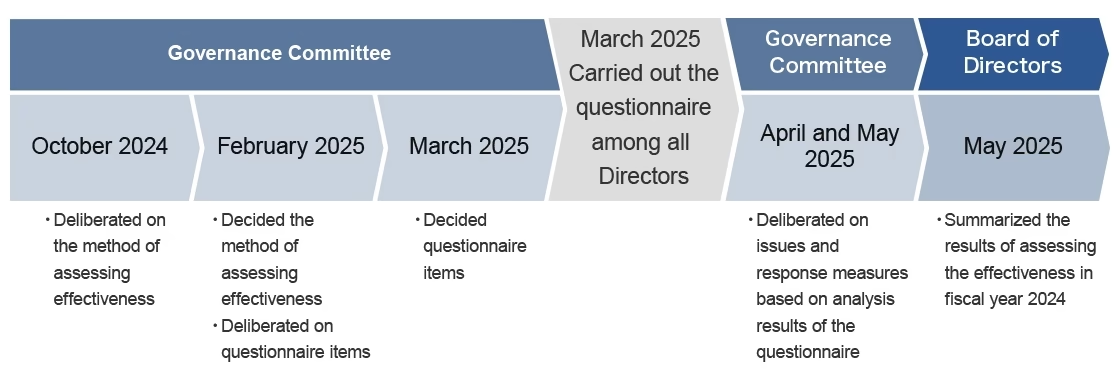
- At the Governance Committee meeting held in February 2026, the method of assessing the effectiveness of the Board of Directors for FY2025 was discussed. While the necessity of using a third-party organization was considered, it was reaffirmed that in-house effectiveness assessments are more effective in identifying issues based on our vision for the Company.
- A questionnaire survey on the effectiveness of the Board of Directors, Governance Committee, Nomination Committee, and Compensation Committee was conducted for all Directors. In addition, the secretariat conducted individual interviews with all Outside Directors to understand the background of their opinions and requests, followed by in-depth, one-on-one discussions with the Chairperson of the Board of Directors and the President & CEO regarding the Board’s effectiveness.
- The Governance Committee deliberated multiple times on the opinions and requests from each Director and the policy for addressing the identified issues, and the Board of Directors assessed the effectiveness of the Board in FY2025.
Results
The major results of the assessment above are shown below:
- ①It was determined that MHC’s Board of Directors is sufficiently performing its role.
- In the formulation of the 2028 MTMP, the Board of Directors was able to allocate sufficient time to discuss important points, such as the analysis of internal and external environments, measures to drive the enhancement of corporate value over the medium to long term, and key strategies including the restructuring of our business portfolio.
- Through follow-up on important matters and investment projects that posted losses, the Board of Directors reviewed the background, assumptions, and decision-making criteria at the time of decision-making and obtained lessons and insights to be applied to future investment policies and frameworks, etc.
- In terms of the Board’s operation, improvements were implemented, including timely and appropriate agenda setting to promote substantive discussions and a review of presentation templates. Initiatives such as discussions among independent Outside Directors only and communication between the Board of Directors and Executive Officers were also evaluated as effective.
- ②It was determined that MHC’s Governance Committee, Nomination Committee, and Compensation Committee are sufficiently performing their roles.
- The Governance Committee steadily advanced measures to address issues identified in the previous year’s effectiveness assessment, while also engaging in discussions on corporate governance and risk management frameworks aimed at strengthening the Company’s earning power.
- The Nomination Committee discussed the consideration of the skills matrix, the nomination of new Director candidates, etc. while the Compensation Committee discussed increasing the proportion of variable compensation in officers’ compensation as an incentive to enhance corporate value over the medium to long term, as well as the performance indicators and weighting linked to the key performance indicators of the 2028 MTMP.
- ③As the issues to address in FY2026, it was confirmed that the Board of Directors will discuss our new 10-year vision and Company-wide themes (such as DX) while continuing to discuss talent development, the role and approach to corporate governance, etc..
In addition, by continuing to refine operational practices to further enhance the effectiveness of the Board of Directors and the committees, we will further strengthen governance.
Compensation for officers
1. Basic Policy
- MHC officers’ compensation is designed to enhance corporate value over the medium to long term through the execution of business strategies, and is set at an appropriate level with respect to the roles and responsibilities of each officer by also taking market levels into consideration.
- Also taking into account incentives for officers, the ratio of fixed remuneration and variable compensation, key performance indicators (KPIs), and their respective weightings are appropriately determined.
According to the basic policy above, MHC’s Board of Directors resolves the policies on the compensation, etc. of individual Directors (excluding persons who are Audit & Supervisory Committee Members).The compensation, etc. of Executive Officers shall be handled in the same manner as the compensation, etc. of Executive Directors.
2. Compensation System
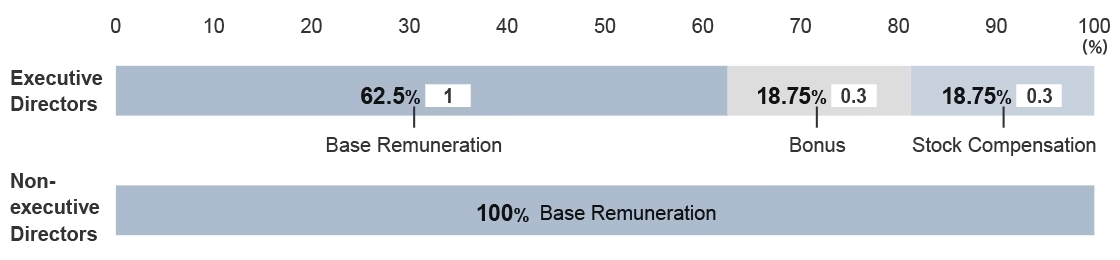
- In principle, Executive Directors’ compensation, etc., consists of base remuneration, short-term incentive compensation (performance-based monetary compensation), and medium-to long-term incentive compensation (performance-based stock compensation). As short-term incentive compensation, cash is paid as a bonus, while medium-to long-term incentive compensation is paid in MHC’s shares, etc. using a trust framework.
- To serve as an incentive to enhance corporate value over the medium to long term and business performance over the short term, the ratio of fixed remuneration (base remuneration) to variable compensation (bonus and stock compensation) is set at approximately 1:1 (the ratio of base remuneration to bonus to stock compensation is set at approximately 1:0.5:0.5).
- MHC uses a BIP (Board Incentive Plan) trust, which is closely linked to the medium- to long-term performance of MHC and high in both transparency and objectivity, as the stock option system. The BIP trust is intended to further increase Directors' willingness to contribute to expanding MHC’s corporate value over the medium to long term, and to share the benefits and risks of stock price fluctuations with shareholders.
- Bonuses and stock compensation, which represent incentive compensation, are not paid to non-executive Directors (excluding persons who are Audit & Supervisory Committee Members) from the standpoint of ensuring the effectiveness of their supervisory functions, and to Directors who are Audit & Supervisory Committee Members from the standpoint of ensuring the fairness of audits.
- The amounts of compensation for Directors (Audit & Supervisory Committee Members) shall be decided through discussions among Directors who are Audit & Supervisory Committee Members, within the range resolved at the General Meeting of Shareholders.
Compensation System for Executive Directors
| Type of Compensation | Details of Compensation | Percentage of Compensation | KPIs for Evaluation/ Evaluation Weight |
Range of Payment Coefficient Based on KPI Achievement | |||
|---|---|---|---|---|---|---|---|
| Fixed | Base Remuneration |
|
50% 1 | - | - | ||
| Variable | Bonus (Short-term Incentive)Performance-based |
|
25% 0.5 | KPI\Position | Representative Director | Other |
0 - 150% |
| ROE*1 | 40% | 28% | |||||
| ROA*2 | 30% | 21% | |||||
| Net Income Attributable to Owners of the Parent | 30% | 21% | |||||
| Responsible Duties | - | 30% | |||||
| Stock (Medium- to Long-term Incentive)Performance-based |
|
25% 0.5 | ROE*1 | 30% |
0 - 150% |
||
| ROA*2 | 20% | ||||||
| Net Income Attributable to Owners of the Parent | 20% | ||||||
| TSR against TOPIX growth rate*3 | 10% | ||||||
| GHG Emissions vs. FY2019 (Scope 1, 2)*4 |
10% | ||||||
| MHC Engagement*5 | 10% | ||||||
- *1Return on equity
- *2Return on assets
- *3Total shareholder return
- *4The FY2028 target has been set as a milestone for achieving the FY2050 net-zero target, based on a constant linear decrease from the FY2024 result.
- *5Percentage of organizations achieving a high score level in the employee engagement survey results
(percentage of organizations where more than half of the respondents gained high scores for both initiative and diversity)

Composition of Compensation
Malus and Claw-back Clause for Stock Compensation and Shareholding Policy
- As for stock compensation, the points or share conversion points that have already been granted can be confiscated, and money equivalent to MHC’s shares, etc. that have already been delivered reclaimed, in the case of a material violation of the office regulations or internal regulations, resignation for personal reasons during the term of office against the will of MHC, dismissal for justifiable reasons, gaining employment at a competitor without MHC’s permission, etc.
- MHC recommends the holding of its shares by its Directors. Further, in principle, Directors shall continue to hold MHC’s shares obtained during the term of their office until the time of their resignation, regardless of the number of shares held.
Policy for Constructive Dialogue with Shareholders
With the recognition that it is one of its social responsibilities to ensure transparent and sound management while emphasizing initiatives to achieve sustainable corporate growth and the enhancement of its corporate value over the medium to long term, MHC pursues proactive and constructive dialogue with shareholders and investors.
With the Corporate Communications Department serving as the primary point of contact, MHC has established a system for collaboration with the Corporate Planning Department, Accounting Department, General Affairs Department, Human Resources Department, etc. to implement the following initiatives.
- Financial results briefings are held quarterly each year, in which the President & CEO and management provide explanations and also answer any questions that are asked.
- MHC’s management and the Corporate Communications Department conduct individual interviews with domestic and foreign shareholders and institutional investors, and IR and SR activities, such as participation in briefings and various conferences.
- MHC provides a wide range of information such as videos of financial results briefings and materials with scripts provided at the briefings, and summaries of Q&A sessions held at the briefings to stakeholders, including individual investors, on our website. In conjunction with this, MHC participates in IR events and various briefings for individual investors which are organized by securities companies and stock exchanges.
Opinions and concerns expressed in the dialogue with shareholders are promptly reported to MHC’s management. In addition, those are regularly reported to the Board of Directors so that the information is shared with independent Outside Directors as well. MHC appropriately and carefully manages insider information in accordance with MHC’s internal rules and also discloses such information in accordance with the Information Disclosure Policy. Please refer to our website for the Information Disclosure Policy:
Cross-shareholdings
1. Policies for Cross-shareholdings
Under the corporate policy for enhancing its corporate value, MHC holds listed stocks for the purposes of ① and ② below:
- ①Developing stable and long-term relationships with business partners and promoting business
- ②Strengthening such relationships based on capital and business alliances, and creating new business opportunities
In its cross-shareholding practice, MHC’s basic policy is to regularly examine if it is rational to hold each stock and sell those that are judged no longer rational to hold, after gaining understanding of its business partners while considering the impact of selling stocks on businesses and markets.
Even when it is judged as rational to hold stocks, MHC may sell such stocks in consideration of the impact of the risk of mark-to-market valuation fluctuation of the stocks on MHC’s finances, capital efficiency, etc.
The change in the number of listed stocks held since March 31, 2016 is as follows. The number decreased from 134 to 19 as of March 31, 2026.
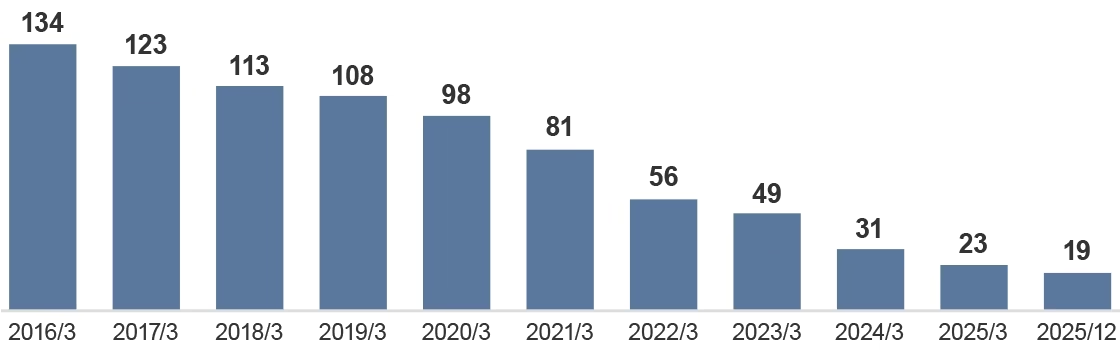
- *The numbers for March 2016 to March 2021 are the combined totals of those from the former Mitsubishi UFJ Lease & Finance and Hitachi Capital.
The numbers for March 2017 to March 2021 do not include the numbers of stocks cross-held by both companies.
2. Method for Verifying the Rationality of Cross-shareholdings
MHC’s cross-shareholding policy is decided based on ① and ② below and its rationality is verified at the Board of Directors. (See the figure below.)
- ①A quantitative evaluation based on factors including the amounts of business transactions and profits, dividends received, and the cost of equity
- ②A qualitative evaluation of the business activities to date and potential business opportunities in the future
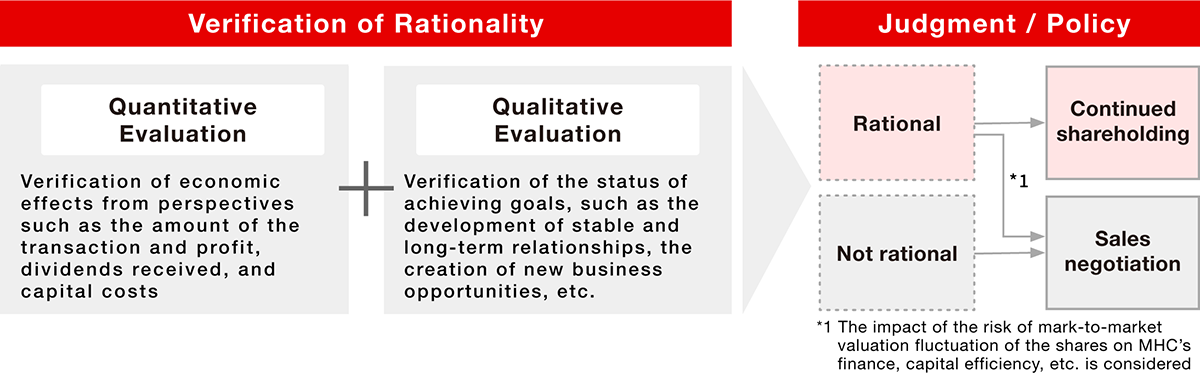
3. Verification of Rationality by the Board of Directors
The Board of Directors examined the listed stock using the method outlined in 2. above at the Board of Directors meeting held in FY2025.
4. Basis for Exercising Voting Rights
MHC exercises its voting rights for cross-shareholdings in light of the purposes described in 1. above.
Concerning the following agendas which may affect the enhancement of corporate value and the sustainable growth of MHC and its business partners over the medium to long term, MHC exercises its voting rights after carefully verifying their details and potential impact:
- Agenda on the disposal of surplus
- Agenda on the election of Directors and auditors
- Agenda on organizational restructuring
- Agenda on anti-takeover measures, etc.