
Logistics
Overview of Logistics
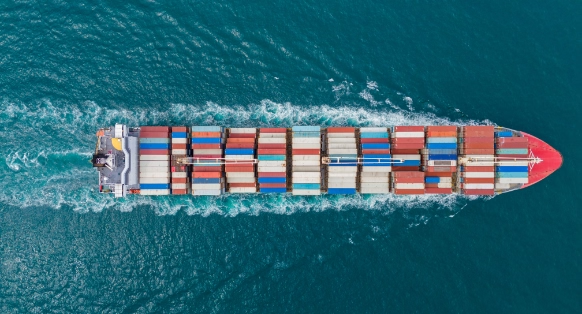
Supporting global logistics with new ideas and helping to reduce environmental impact
In the Logistics segment, we provide transportation equipment—such as marine containers and railway freight cars—that supports global logistics through leasing and financing services for our customers. Marine containers and railway freight cars are essential for ocean and rail transport. These modes of transportation produce lower CO2 emissions compared to other methods and enable the efficient, large-scale movement of goods that sustain diverse industries and everyday life. Through various initiatives, we contribute to reducing environmental impact and addressing social challenges in the logistics sector, while working toward achieving our Group’s materiality goals.
- Main business
- Marine container leasing business
- Railcar leasing business
Strengths of CA International ("CAI"), a subsidiary engaged in marine container leasing
- Established a strong presence in the industry, backed by over 30 years of experience and a team of specialized professionals
- A solid business foundation, including global marketing and operational capabilities
Strengths of PNW Railcars ("PNW"), a subsidiary that leases railcars
- A well-balanced portfolio with strong risk resilience
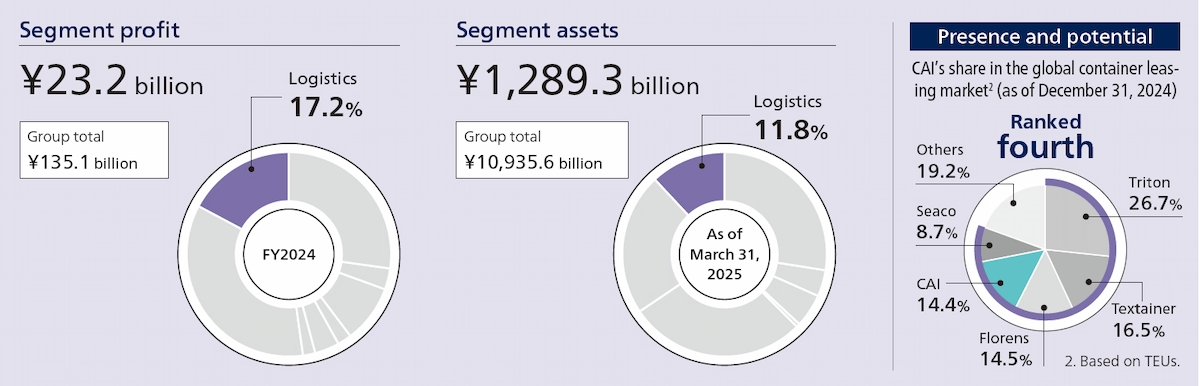
Logistics Initiatives
Main initiatives in the marine container leasing business
- We entered the marine container leasing business in 2014 and strengthened our position in 2021 through the acquisition of CAI, a leading U.S. marine container leasing company. In January 2023, CAI merged with another Group company, with CAI as the surviving entity.
As one of the first major Japanese leasing companies to enter this market, we now rank fourth globally in terms of market share. - This business generates profits primarily from long-term leasing contracts, typically spanning 13 to 15 years, and also benefits from gains on container sales after lease expiration.
- By making strategic investments aligned with container market cycles and securing high lease rates over the long term, we have built a resilient profit base that is highly resistant to market fluctuations.
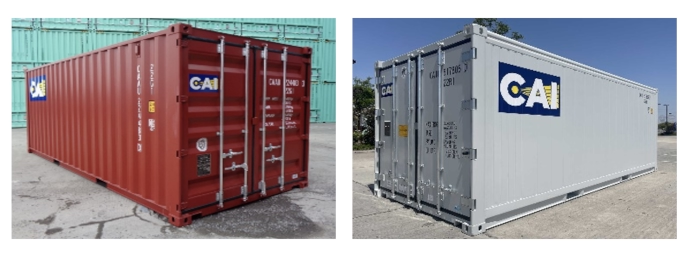
Characteristics of the marine container leasing business
- Typically, after purchasing containers, we enter into an initial long-term lease of approx. 5-8 years, followed by either a lease extension or a second lease to another customer.
- Lessees are primarily maritime shipping companies. After a total service life of 13-15 years, containers are sold, often for onshore use such as warehouses or residential units.
- Lease fees are fixed for the contract term, and do not change regardless of fluctuations in container market conditions.
- Long service life and low risk of obsolescence, combined with strong demand for secondary use, helps keep used container prices stable, resulting in low residual risk.
- Leveraging our market intelligence, we closely monitor market cycles and make timely, flexible investments. By supplying the right number of containers at the right time and place, we have consistently secured high lease rates.

[Reference] The marine container leasing business environment
- The global number of containers has continued to increase in line with global economic growth (i.e., an increase in transport volume).
- The ratio of containers held by leasing companies has hovered around 50%. The leasing market is expected to grow in line with the increase in the total number of containers.
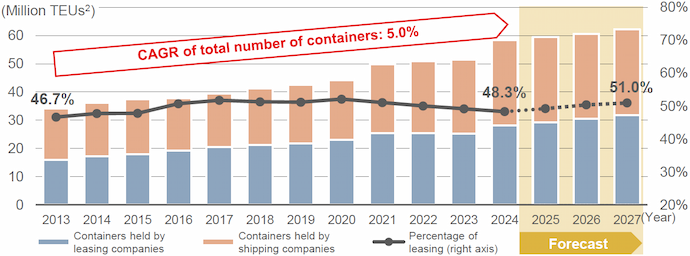
- 1.Source: “Container Census & Leasing Annual Report 2025/26” (on a TEU basis, as of the end of December 2024), Drewry Shipping Consultants Limited.
- 2.Twenty-foot equivalent unit: A capacity unit equivalent to a 20-foot dry container.
Main initiatives in the railcar leasing business
- We entered the business in 2013, and in 2017 launched our own platform and began operating business in North America. We possess approx. 22,000 railcars (as of the end of FY2024), which makes us one of the top 10 North American railcar lessors.
- In North America, rail networks extend from Mexico to Canada and serve as a major mode of transportation, with rail accounting for more than 30% of freight movement in the United States.
- An asset turnover model that generates profits from stable lease revenue and gains on sales of owned railcars.
We continuously optimize our portfolio to meet market needs through annual asset replacements —selling selected railcars and acquiring new ones.
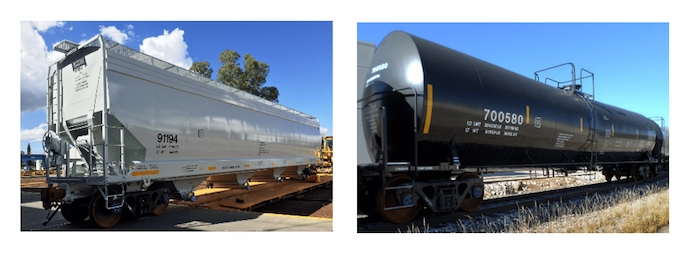
Characteristics of the railcar leasing business
- While railcars typically have a life cycle of 40-50 years, a standard lease term is around 3-5 years, with leases often renewed multiple times through extensions or changes in lessees.
- Main lessees are railway operators and major shippers, including petrochemical companies and leading grain producers.
- Lease fees remain fixed throughout the contract term, ensuring stable revenue regardless of market fluctuations.
- In the North American railcar leasing market, a secondary market enables the sale of leased assets after a certain holding period, generating unrealized gains driven by depreciation and inflation.
- Although used railcar prices fluctuate based on cargo demand and supply-demand balance, moderate inflation in the US helps preserve asset value. Furthermore, railcars have low obsolescence risk due to limited technological disruption and are durable assets with a potential service life of nearly 50 years.

[Reference] The railcar leasing business environment
- The transport volume of railcars, a core transport infrastructure that supports North American industry, has been stable.
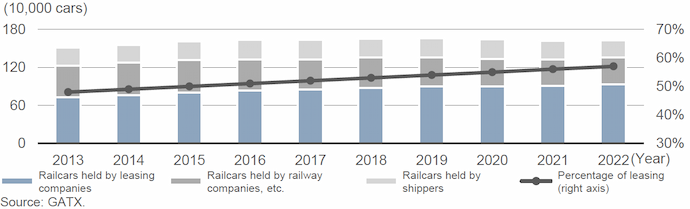
- The number of railcars in the North American market has been stable at around 1.6 million. Meanwhile, the percentage of leasing has continued to increase by around 1pt annually, reaching 57% as of 2022.
- The number of railcars held by leasing companies is approx. 0.9 million, with the top 10 companies accounting for an approx. 90% market share.
- As railway companies and shippers focus more on capital investment in their core businesses than in railcars, the percentage of leasing is on an upward trend.
Overview of Mobility
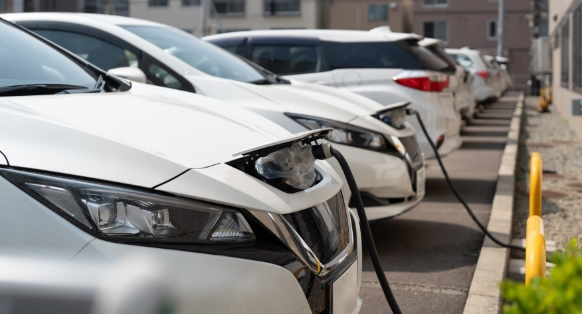
Contributing to the resolution of social issues by realizing mobility businesses with low environmental impact
In the mobility segment, we collaborate with partner companies to deliver high-value-added auto leasing and mobility services worldwide.
As the automotive industry undergoes a major transformation, our business strategy focuses on strengthening and developing EV-related initiatives to meet society’s decarbonization needs. We aim to help address social issues through efficient, low-carbon mobility services that support the movement of people and goods.
- Main business
- Auto leasing business and mobility-related services focused on EVs in Japan and ASEAN countries
Strengths of mobility
- The ability to provide a wide range of services necessary for the introduction and operation of EVs, leveraging the integrated strength of our Group and collaboration with shareholders and external partners
- A business foundation in Japan and the ASEAN region through collaboration with the world’s leading players in the auto leasing industry
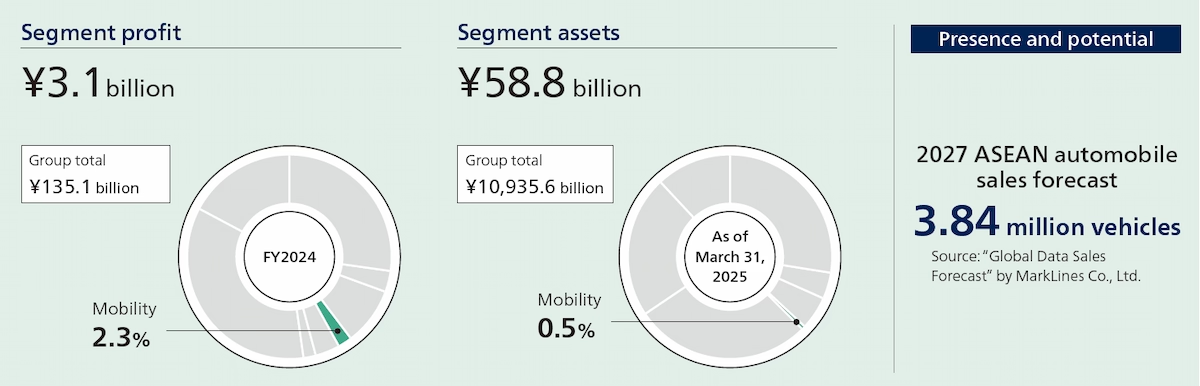
Mobility Initiatives
Main domestic initiatives
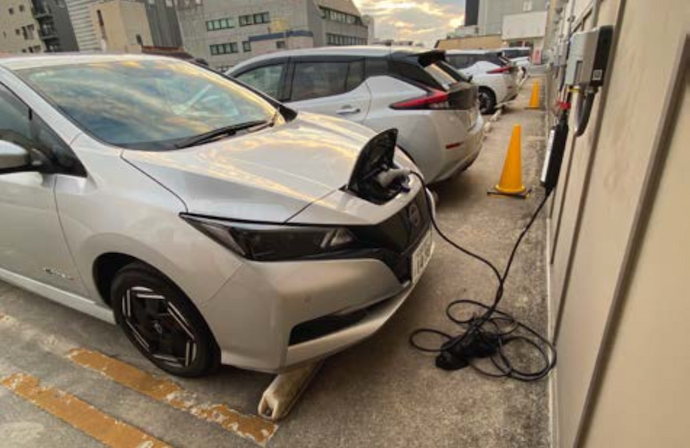
- We operate through Mitsubishi Auto Leasing Corporation, a 50-50 joint venture with Mitsubishi Corporation.
In addition to vehicle maintenance leasing, we provide solutions and services for optimized fleet management and EV adoption. - Following the merger of Mitsubishi Auto Leasing and Mitsubishi HC Capital Auto Lease in April 2023, we have generated synergies by combining strong customer bases, extensive experience, and expertise. Leveraging these synergies, we aim to further strengthen our business.
- We continue to offer integrated service packages related to EVs to ensure a smooth transition for customers moving from gasoline and other non-EVs to EVs.
Main overseas initiatives
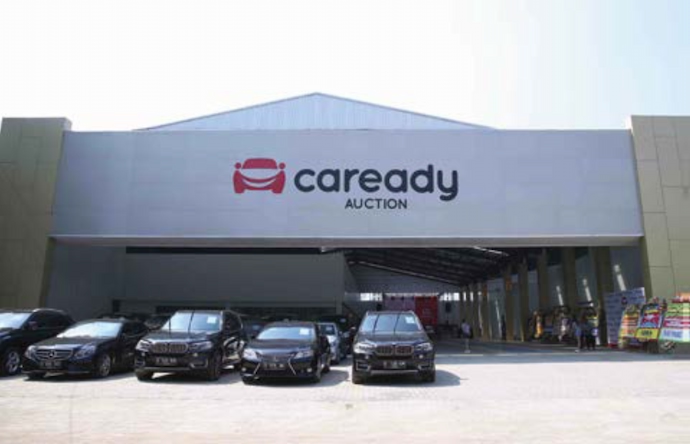
- We operate businesses in the ASEAN region (Indonesia, Malaysia, and Thailand).
- In Indonesia, we run a used-vehicle auction business alongside the auto leasing business.
- In Malaysia and Thailand, we have established and begun operating auto leasing companies in partnership with a global leader in the auto leasing industry.